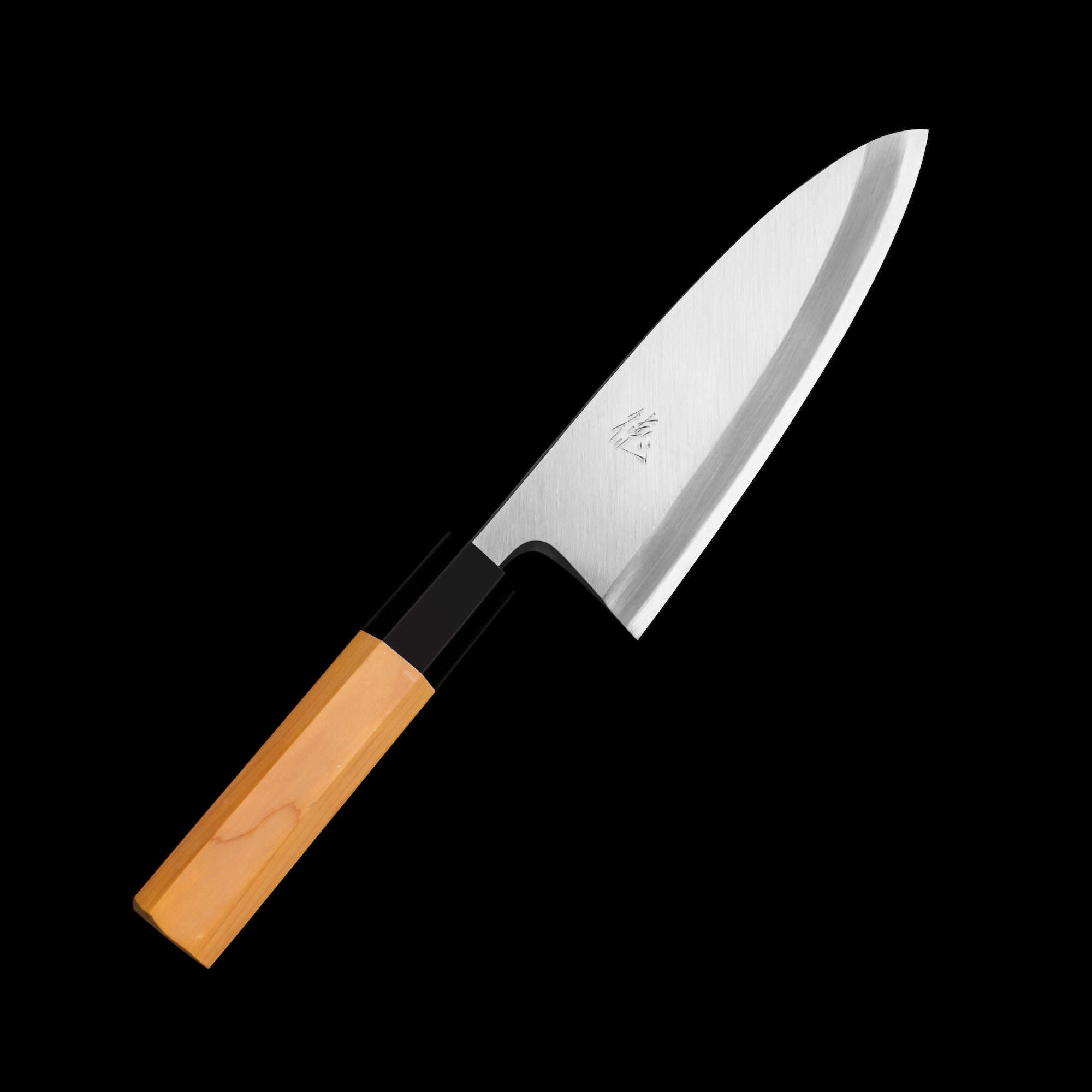
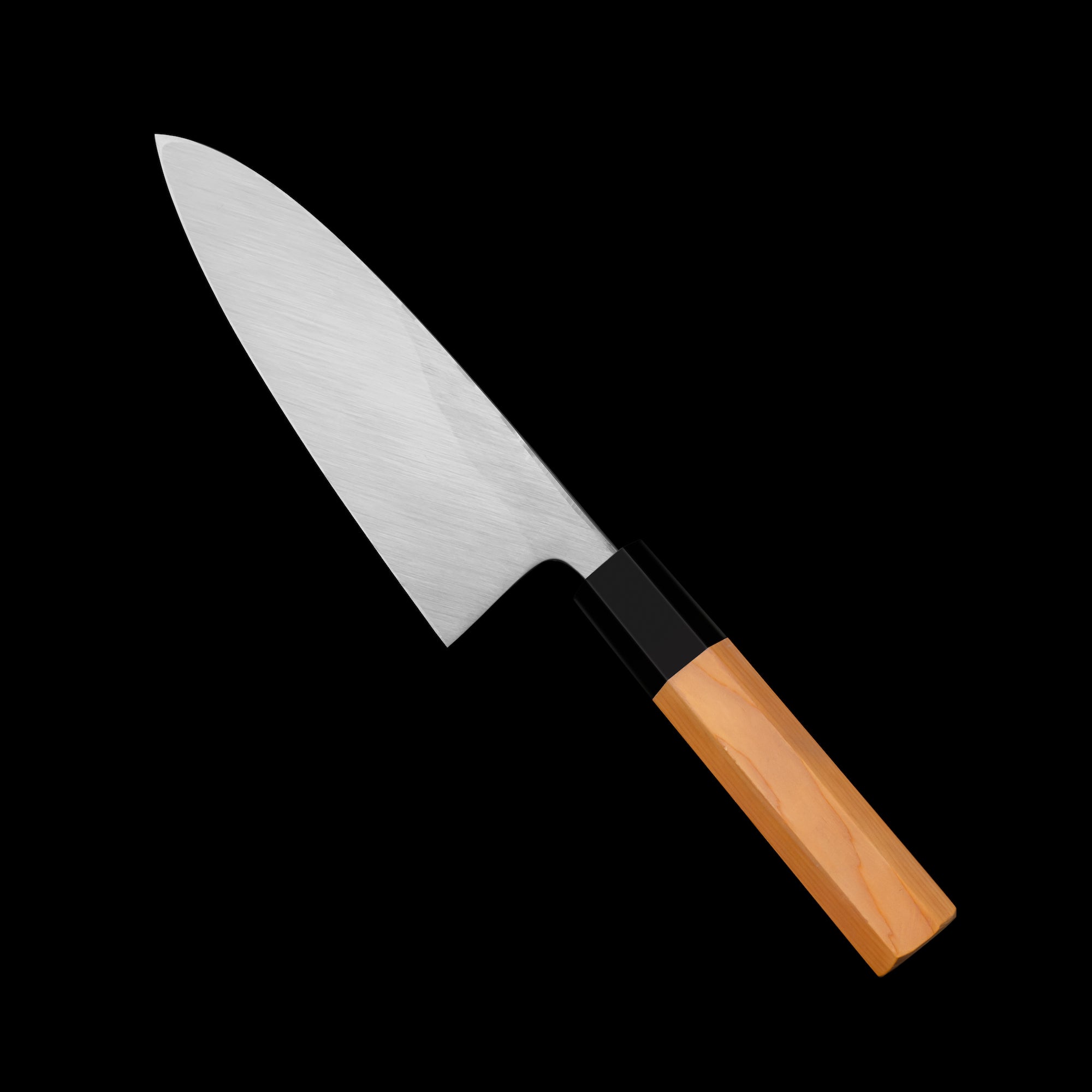
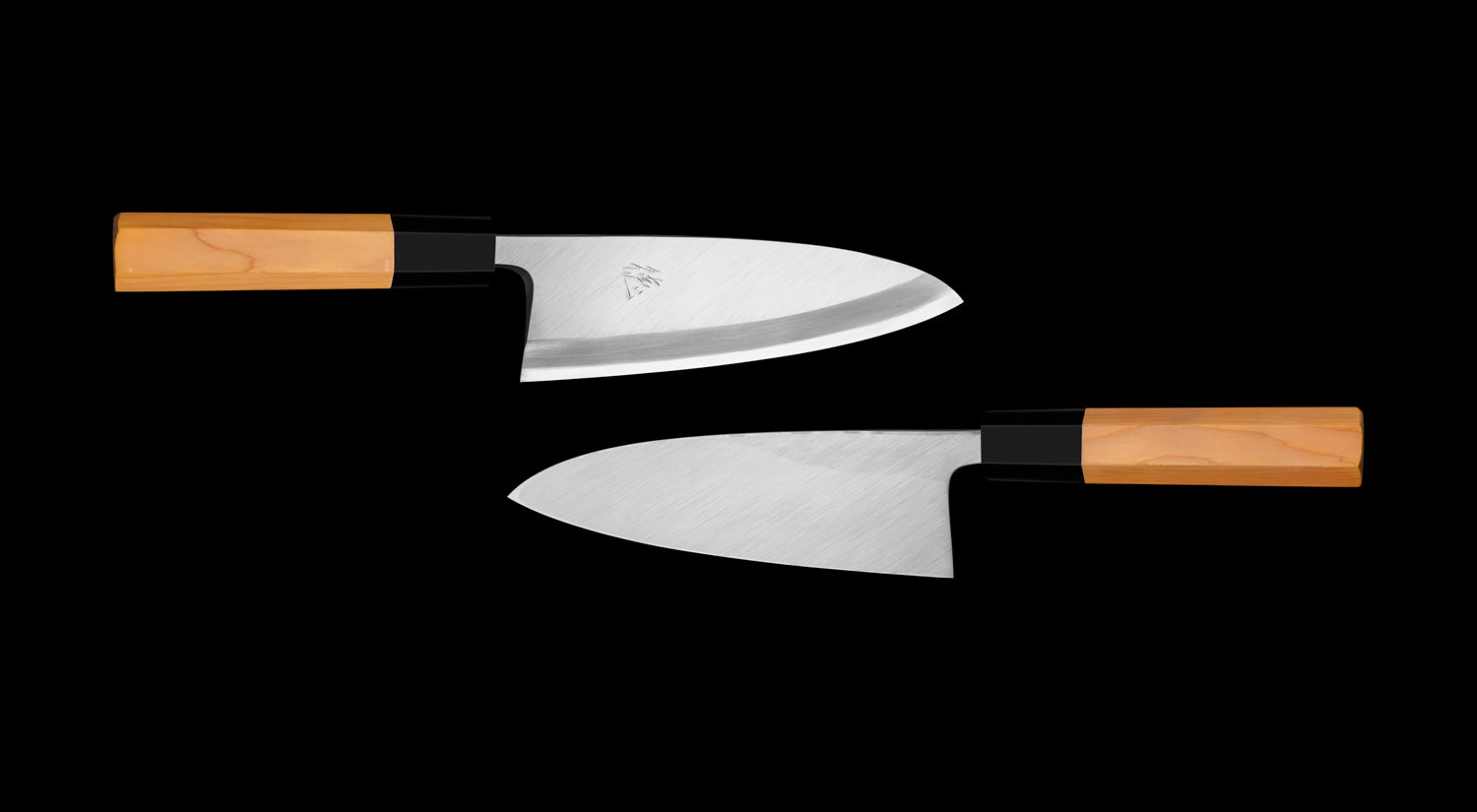
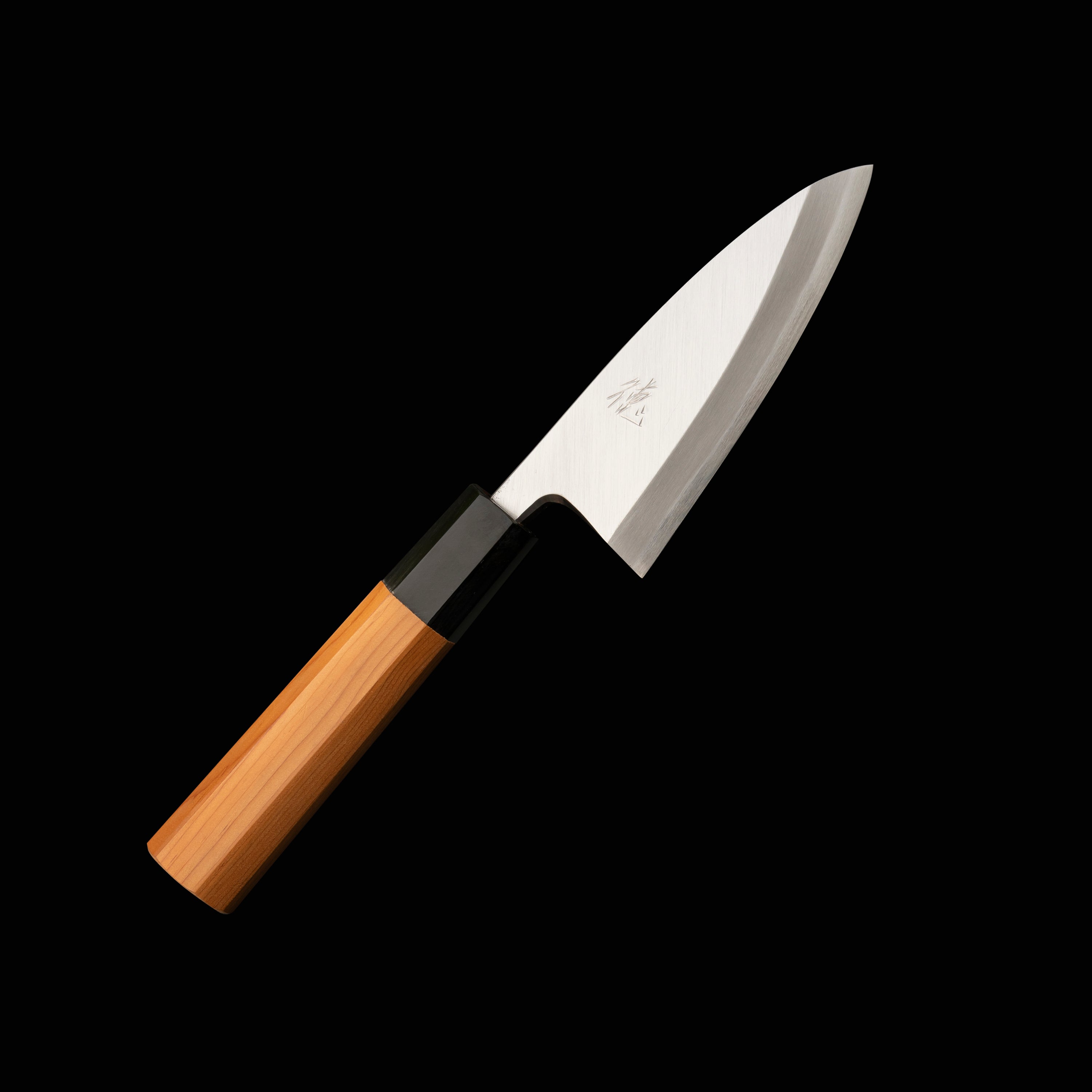
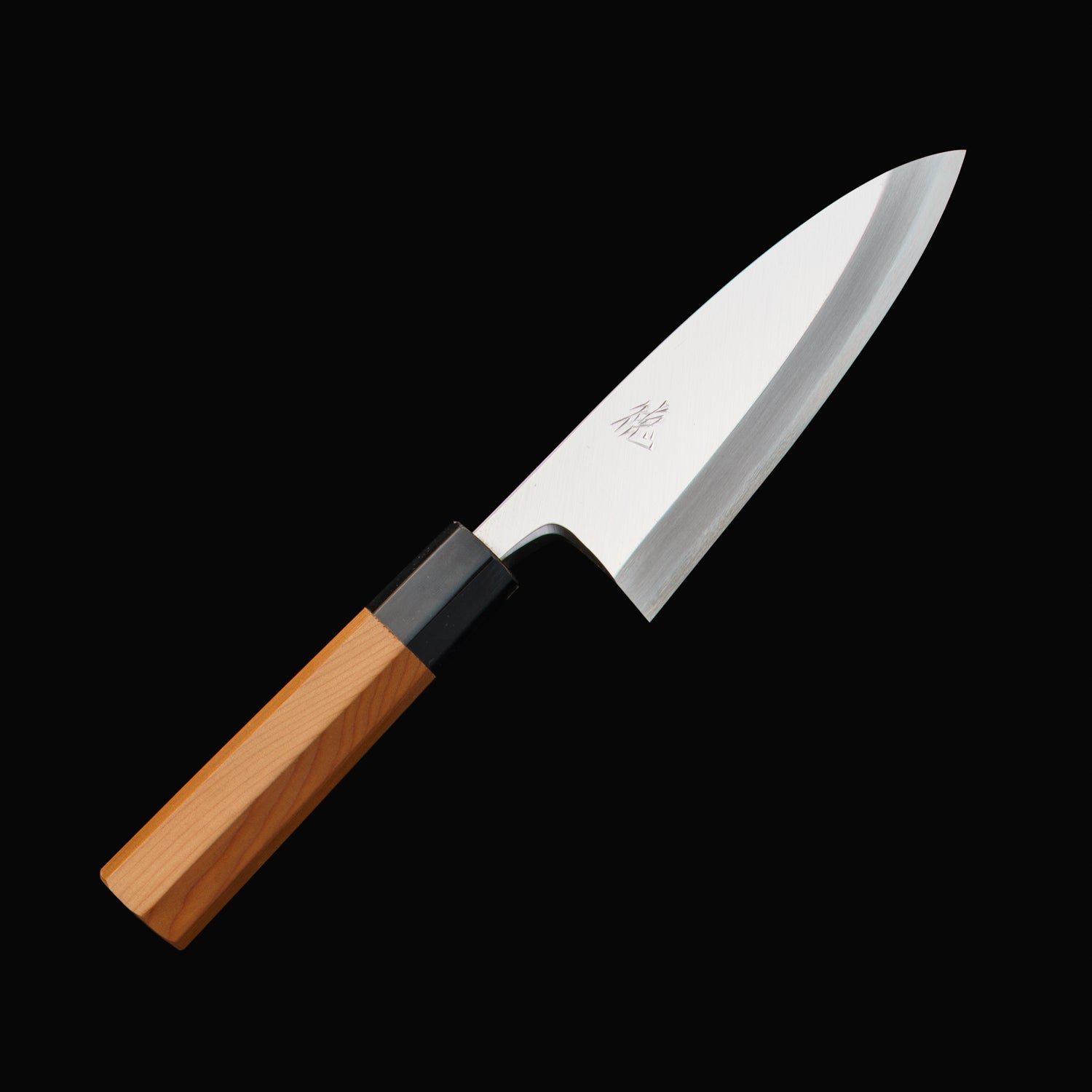
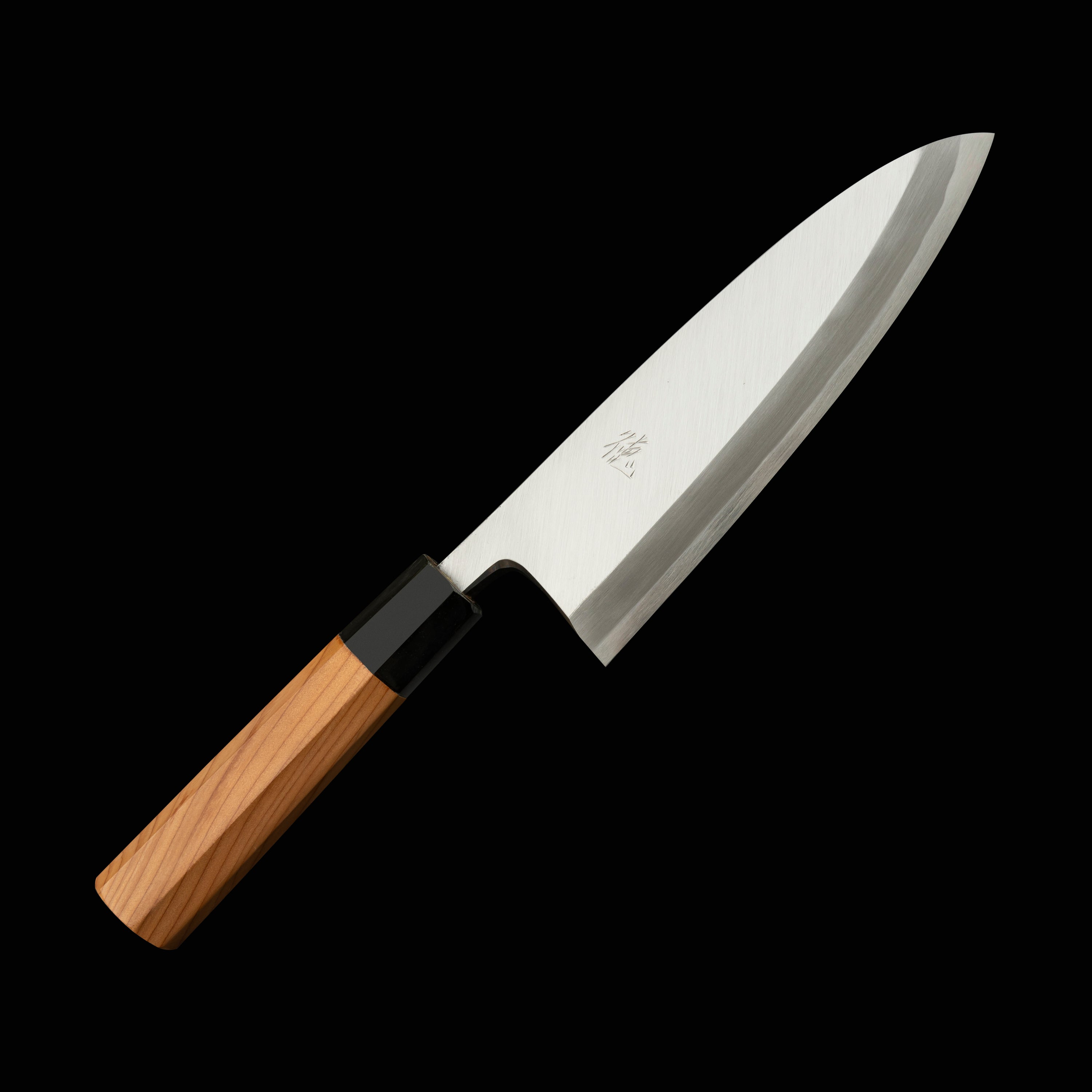
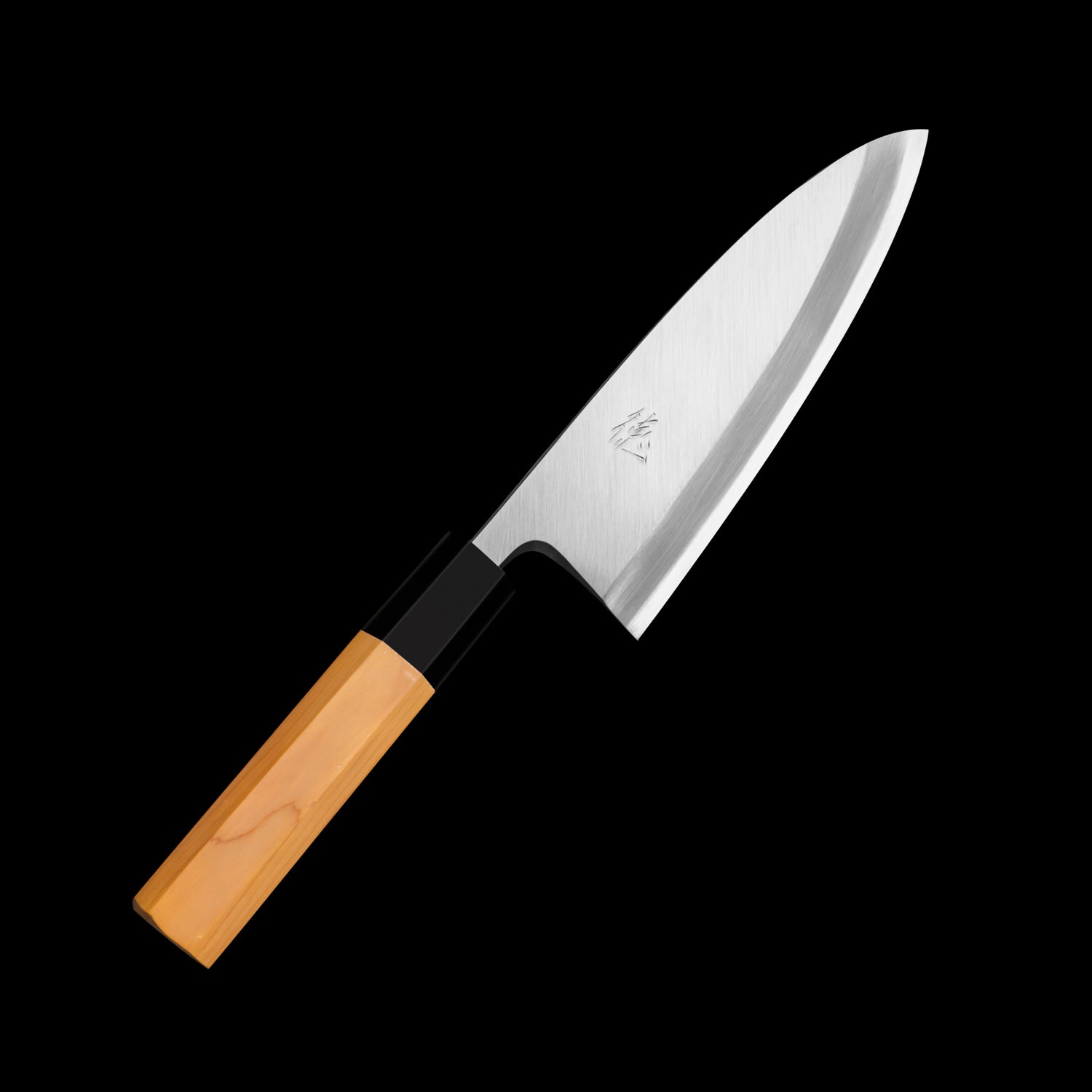
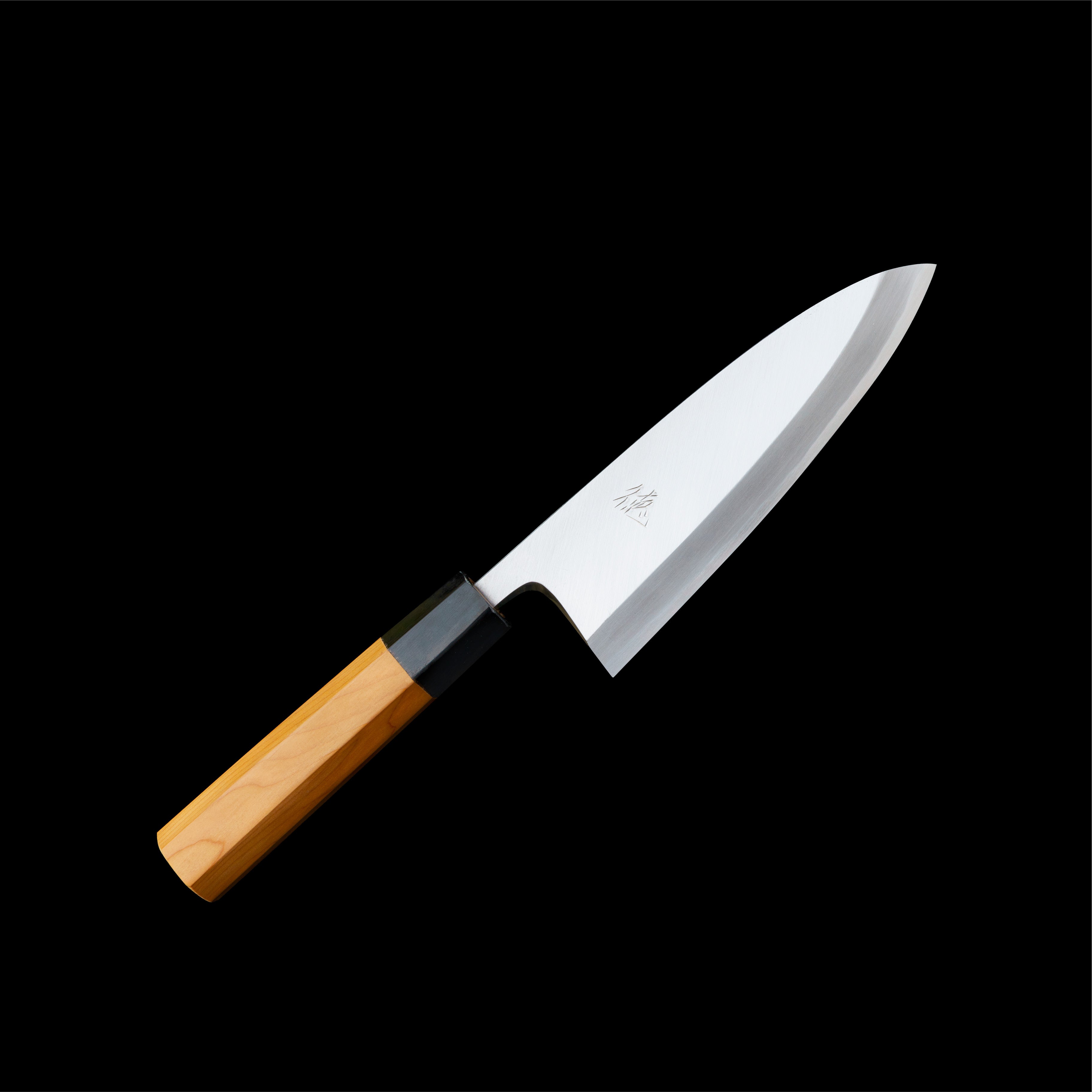
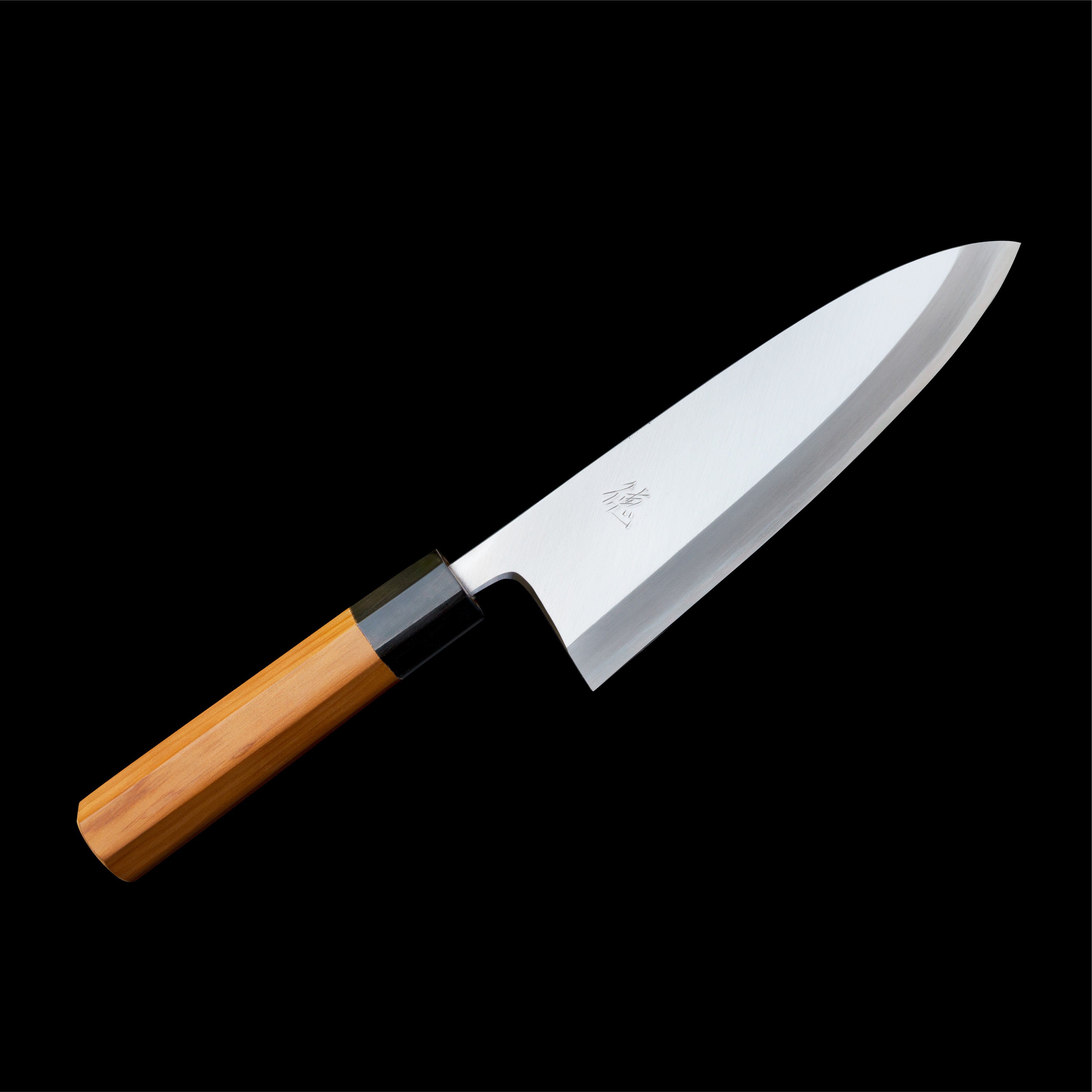
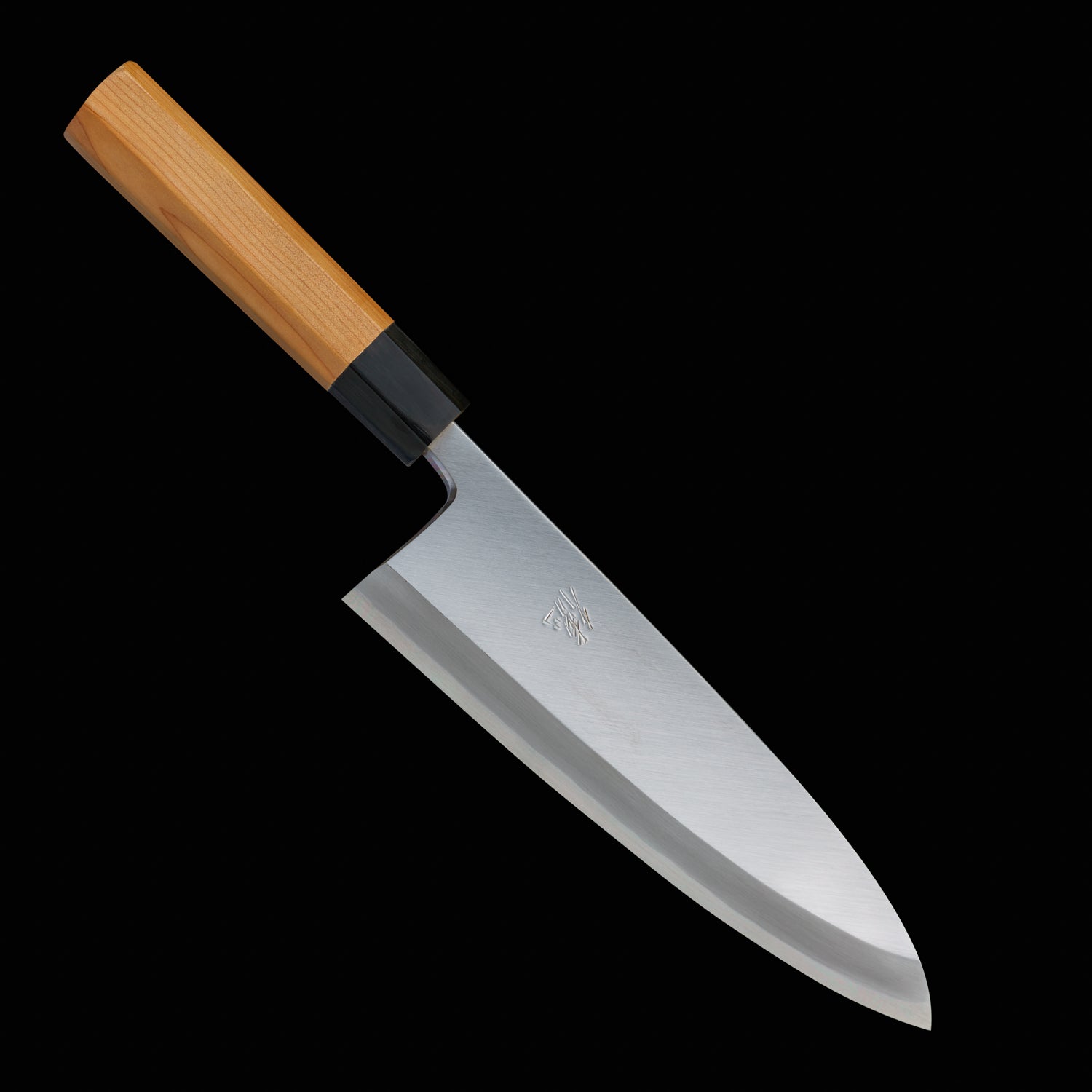
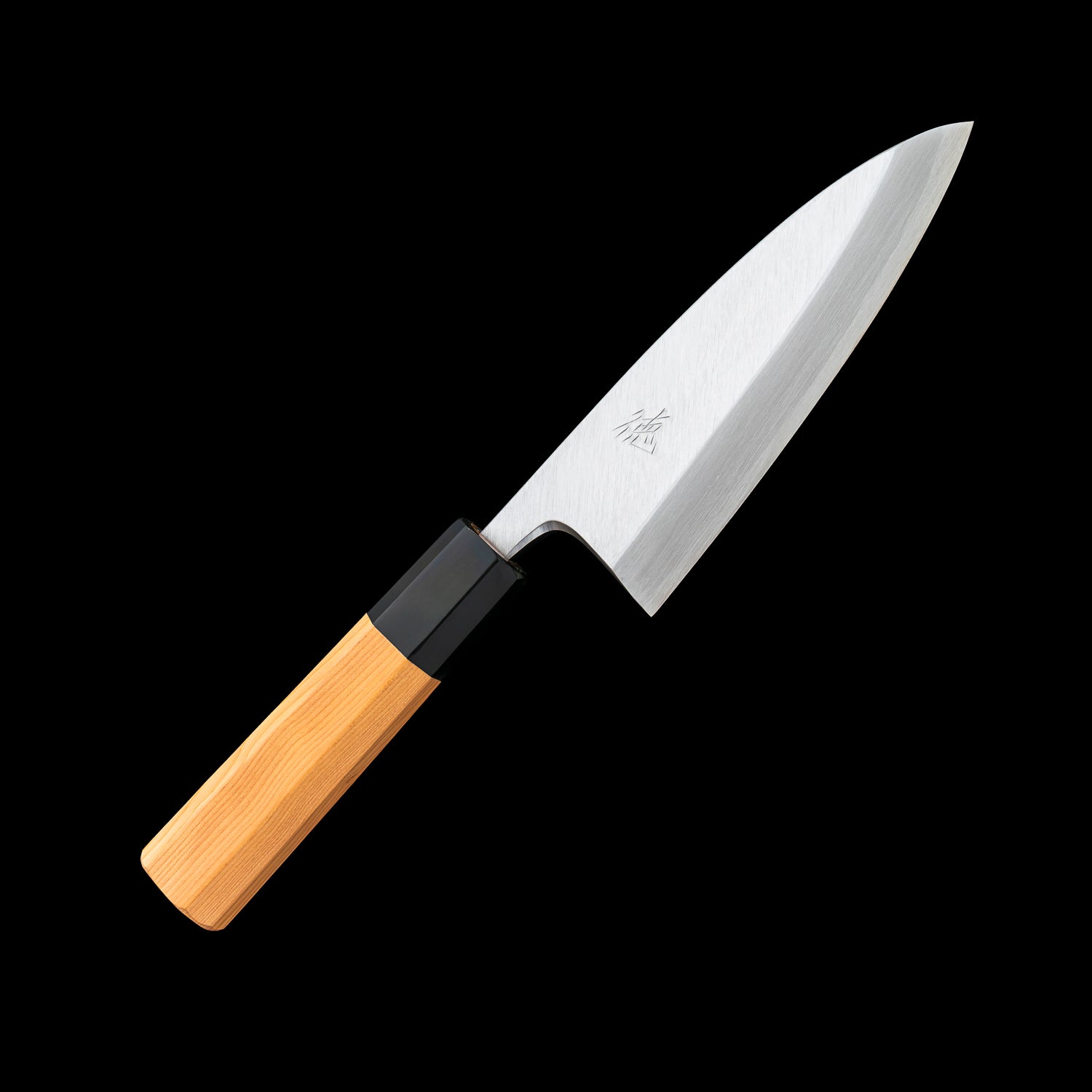
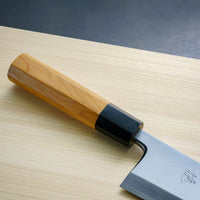
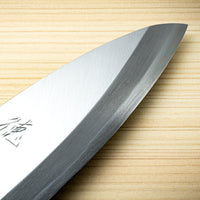
Japan Knife TOKU | Deba knife White paper 2 steel blade Yew octagonal handle
■ Recommended for:
Those who frequently fillet fish
Those who want to fillet fish they caught themselves
Those who want a sharp, single-bevel knife
For filleting sardines or horse mackerel, we recommend a blade length of 150mm or less. For filleting amberjack or bonito, we recommend 165mm or more.
■ Features of this knife
It uses Yasugi Shirogami #2 steel for the core, providing long-lasting sharpness.
Since the blade is made of steel, it is prone to rust.
Shirogami #2 steel is easy to sharpen and has excellent maintainability.
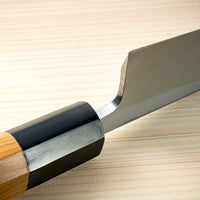
The handle is made of Ichii (Japanese yew), a high-grade wood, and shaped into an octagon, offering an excellent fit in the hand.
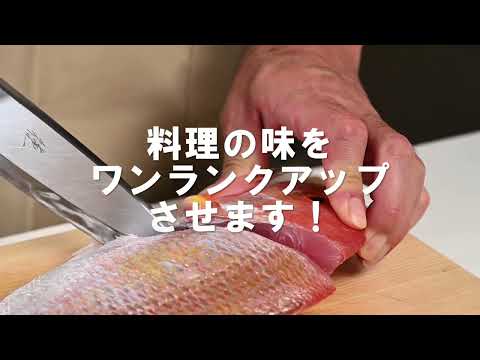
Its moderate weight allows the blade to easily cut into ingredients without excessive force, making it easier to process large fish.
■ Why we handle this knife
It is crafted in Sakai through a division of labor by skilled artisans.
Each knife is finished by specialist artisans in forging, sharpening, and handle attachment.
Sakai has 600 years of knife-making technology.
Sakai forged blades are designated as traditional crafts.
At Japan Knife TOKU, we actually visit the workshops in Sakai to observe and experience the production process.
By directly engaging with the artisans' work and resonating with their philosophy, we continue to carry these products.
■ After-purchase support
Purchasing a knife is not the end.
At Japan Knife TOKU, we actually provide repairs such as resharpening and handle replacement, and you can also consult us about after-purchase maintenance.
For those who wish to sharpen their own knives, sharpening classes are available at our store.
■ Frequently Asked Questions
・Can I use a steel knife even if it's my first time?
Even if you've only used stainless steel knives before, you can use this without any problem.
・How to care for it
After use, wash with a neutral detergent, then wipe off moisture with a dry cloth before storing.
Wiping off moisture helps prevent rust.
・There are no shops near me that offer resharpening services.
Japan Knife TOKU accepts resharpening requests by mail.
Please make a request from the resharpening service page.
・Can I have a name engraved for a gift?
A separate fee for name engraving will be charged, but name engraving by laser is possible.
Please specify the text to be engraved on the cart page.
-
Material
Yasugi White Steel
-
Finishing
Haze Finish
-
Handle
Yew octagon

Sharpness
Durable sharpness
Rust resistance
Maintainability
Taste of Food
Japan Knife TOKU | Deba knife White paper 2 steel blade Yew octagonal handle
Sale price
¥29,800
Tax excluded.
/
¥32,780
Tax included.
Choose options
Japan Knife TOKU | Deba knife White paper 2 steel blade Yew octagonal handle
Sale price
¥29,800
Tax excluded.
/
¥32,780
Tax included.

Quality and Features
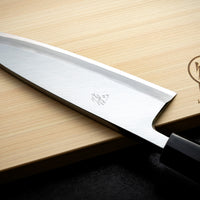
Powerful sharpness to bring out the flavor of ingredients. Master craftsmanship shines through of Sakai knife Deba knife.
A product that has a good balance between else of sharpening and durability of sharpness. The handle is easy to hold and the ingredients come off easy, making it extremely easy to use. Recommended for a wide range of people, from professional chefs to beginner.

Yasugi Shironikou
It is manufactured in Yasugi City, Shimane Prefecture, and is one of the steel materials often used for high-quality kitchen knives and blades. In addition to its high hardness and very good sharpness,Shironi steel is also easy to sharpen, and regular maintenance will keep it sharp for a long time. Rust can be inhibited by wiping off water thoroughly after use.
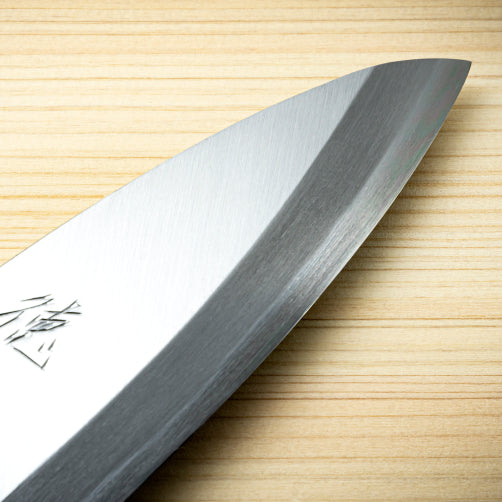

Single-edged design
Only one of the blades is sharpened to improve sharpness. The blade is sharpened sharply on only one side to improve the sharpness of the blade and reduce the contact with the food,allowing smooth cutting. In addition, the back of the blade has an indentation called "Urasuki," which makes it easier for the cut food to separate from the blade.
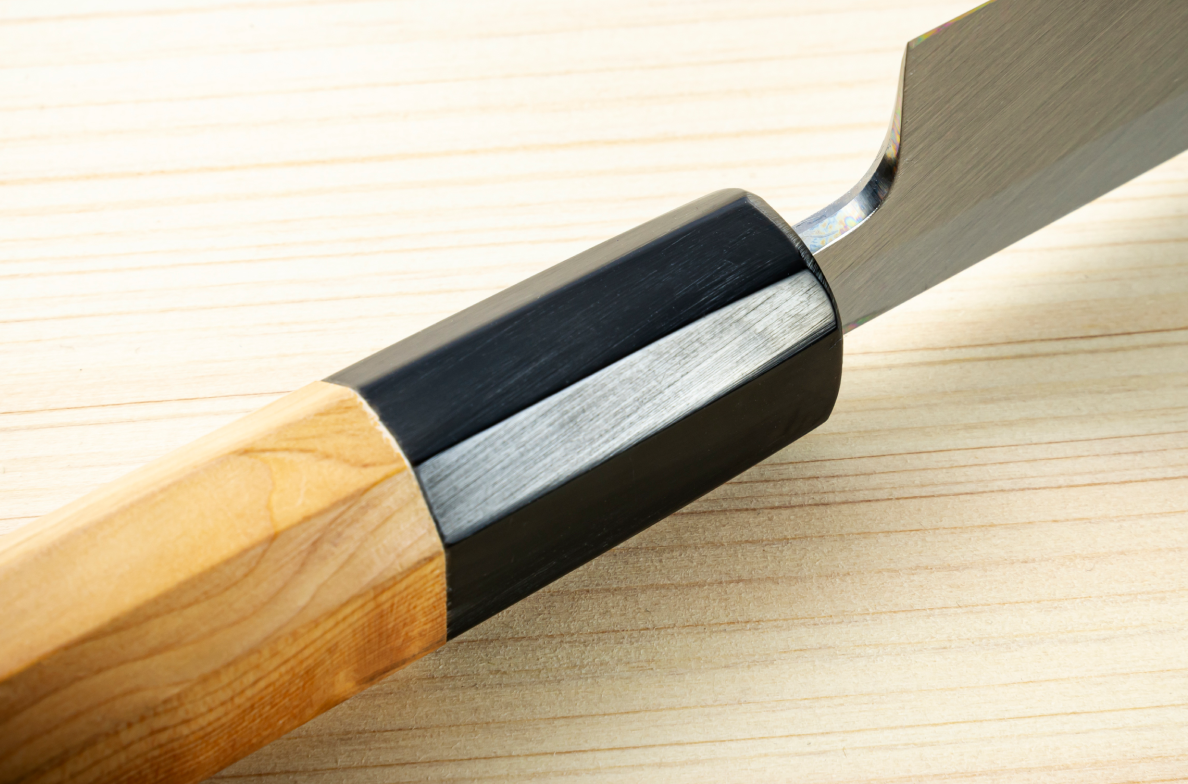
An octagonal handle
A type of wood known as ichii. Due to its excellent durability and feel, it easily fits in the hand even after prolonged use. Because it is molded into an octagonal shape, it is less slippery than a round shape, making it suitable for detailed and forceful work. The handles of Japanese knives are easily replaceable, and when they become old or damaged, they can be replaced with new handles.

Sakai Toku's Commitment and Goal
Sakai Toku sells a wide selection of kitchen knives from all over Japan,
with a focus on "Sakai Uchihamono” made in Sakai City, Osaka.
We are committed to the quality of our knives,
and we hope that more and more people will experience the charm of our knives,
which are carefully crafted one by one,We are selling our knives directly from the makers.
so that we can offer the best quality knives,
We purchase knives directly from the manufacturers to realize reasonable prices.
We also provide after-sales service to ensure that our knives are not disposable,
but can be used for a long time by having them resharpened, We also offer after-sales service.
We can resharpen them at shop and by mail or at our affiliated stores nationwide.
We also offer after-sales service for those who are not sure if they are able to perform maintenance by themselves.
We hope that you will find your favorite one and use it for a long time.
About "TOKU"
Sakai City is home to the Nintoku Imperial Mausoleum, which has been registered as a World Heritage site.
The character for "TOKU" used in the tomb of Emperor Nintoku includes the words "acquired character,"
"socially valuable quality." "desirable attitude that broadly influences others," and "desirable attitude,
The word "TOKU" used in the tomb of Emperor Nintoku means "acquired character,"
"a socially valuable quality," and "a desirable attitude that broadly influences others.
The word "virtue" used in the imperial tomb has the meaning of “acquired character," "socially valuable quality."
and "desirable attitude that broadly influences others.
We believe this character is suitable for people around the world to know and use Sakai kitchen knives,
We decided to use the character "Toku" (virtue) as the name of the knife.panese Kitchen Knife
The logo is based on the motif of the tomb of Emperor Nintoku, with the character "Toku" designed in his own handwriting.
We wish everyone who purchases our products will be blessed with "Toku".
About "Sakai Cutlery"
Sakai cutlery is a general term for traditional knives produced in Sakai City, Osaka Prefecture, and has a history spanning more than 600 years.
The technique used is similar to that used for Japanese swordsmithing, and is characterized by the detailed division of labor between the forging, sharpening, attaching the handle, and carving name. We ensure high quality by having specialized engineers take charge of each process.
Its technique and quality have been recognized, it has been designated a traditional craft, and it is loved all over the world, especially by professional chefs.
The technique used is similar to that used for Japanese swordsmithing, and is characterized by the detailed division of labor between the forging, sharpening, attaching the handle, and carving name. We ensure high quality by having specialized engineers take charge of each process.
Its technique and quality have been recognized, it has been designated a traditional craft, and it is loved all over the world, especially by professional chefs.
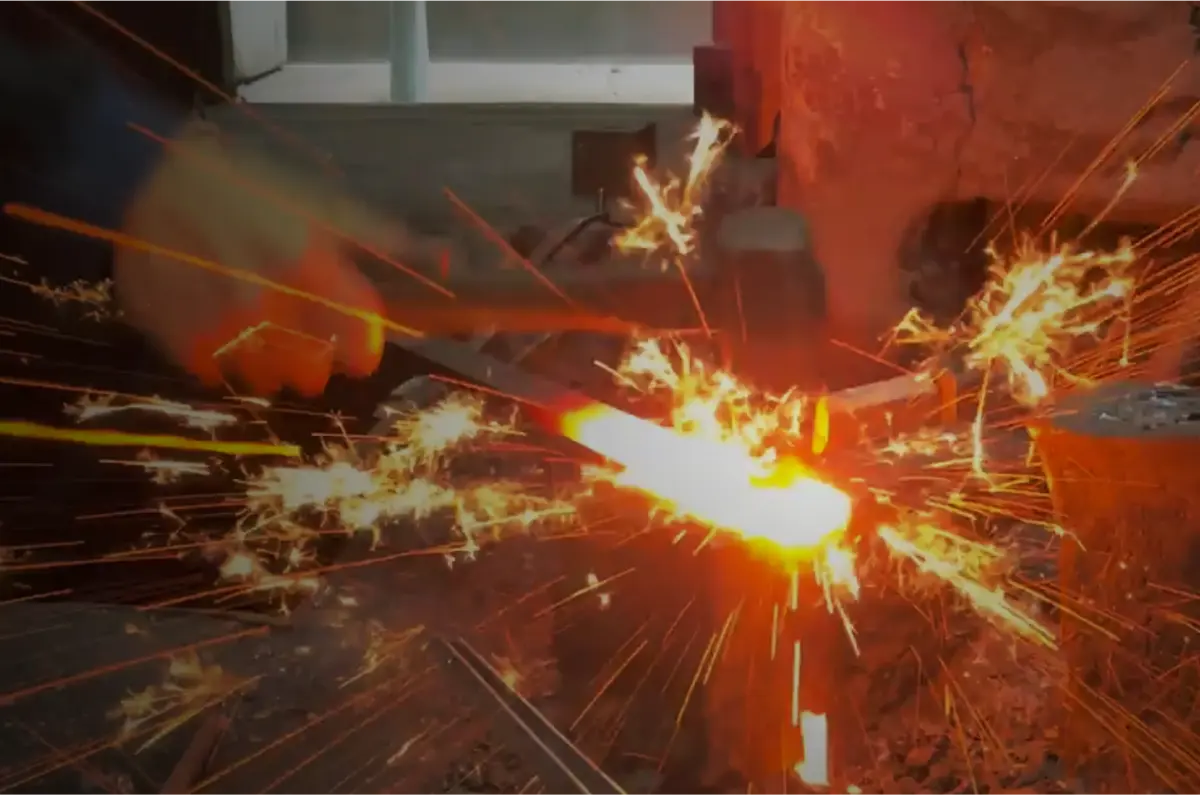


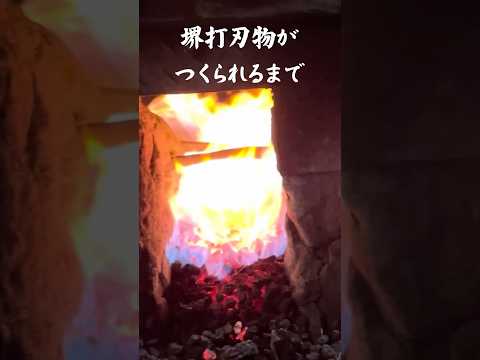
Forging
This process involves heating steel to a high temperature (approximately 1,000°C or higher) and beating it into shape. In this process, the blacksmith beats the steel with a hammer or machine to stretch it and roughly create the shape of the sword blade. At this stage, the steel and soft iron are firmly integrated to create a sword blade with the proper strength. This is an important operation that determines the strength and sharpness of the blade.
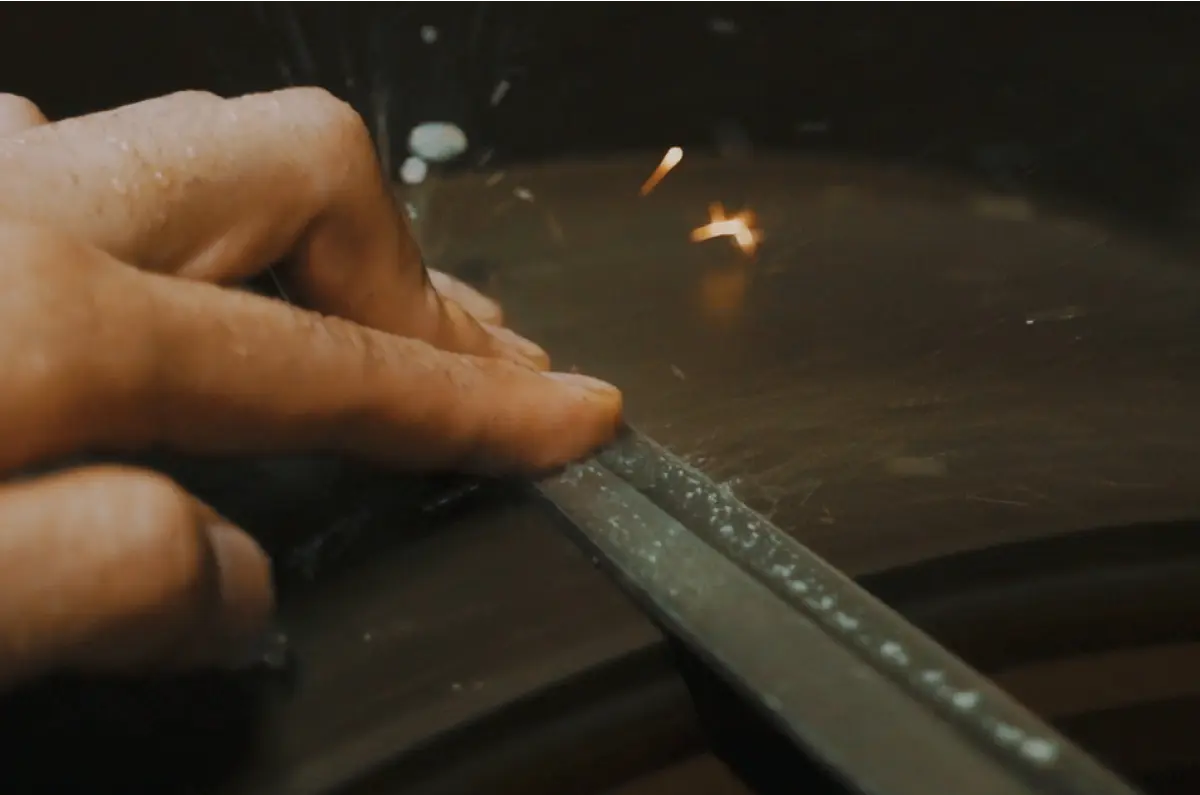


Sharpening
This is the process of sharpening the blade of a kitchen knife to give it the proper angle and sharpness. The blade sharpening of Sakai Uchihamono knives is done by hand by skilled craftsmen and is highly regarded for its quality and precision. After forging, the process is divided into “rough sharpening" to shape the blade and “finishing sharpening” to further polish the sharpness of the knife after rough sharpening. For single-edged kitchen knives made by Sakai Uchihamono, only one side is sharpened, which requires extremely delicate techniques. The way the blade is attached differs depending on the type of knife and the steel used, and the best sharpening method is applied to each.
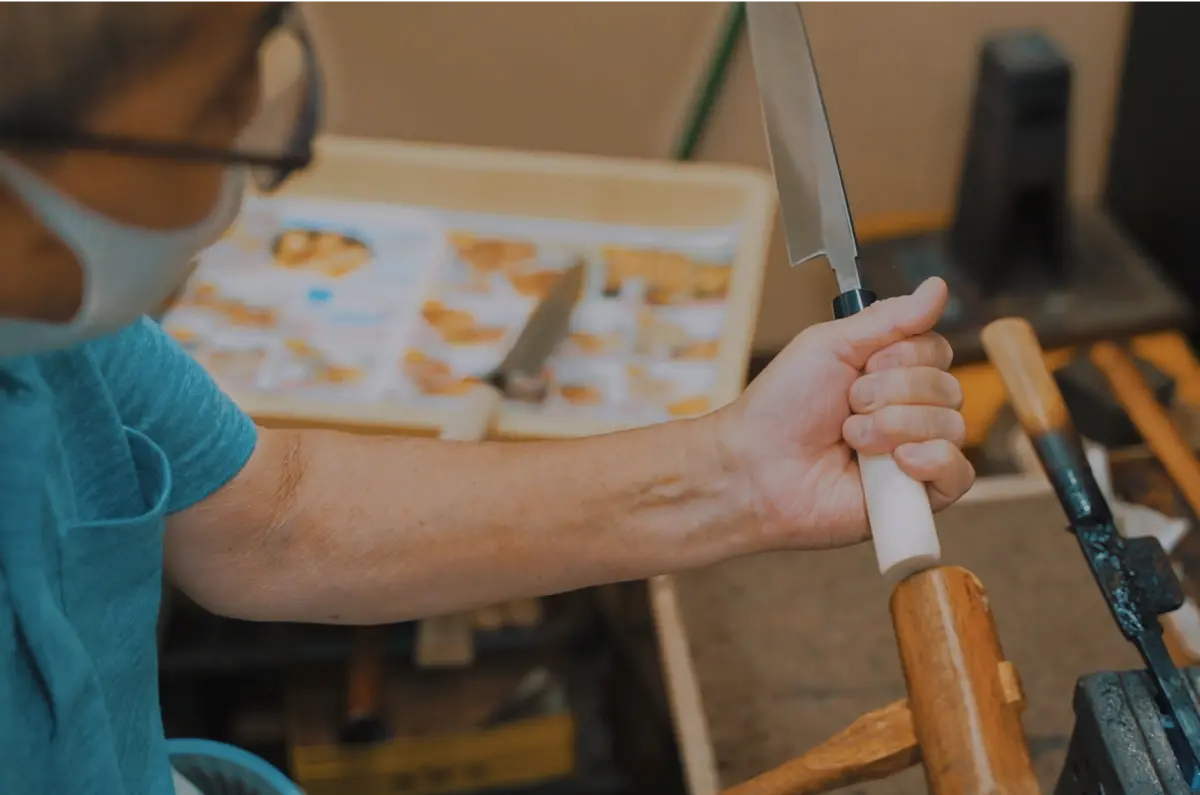


Handle
Once the blade is complete, the next step is to attach the handle. The handle is usually made of wood (such as ichii wood or ebony) and determines the balance and feel of the knife. Craftsmen create handles with shapes that are particularly easy to grip, such as octagonal handles, which combine beauty and practicality. At this stage, the balance of the entire knife is finally adjusted.
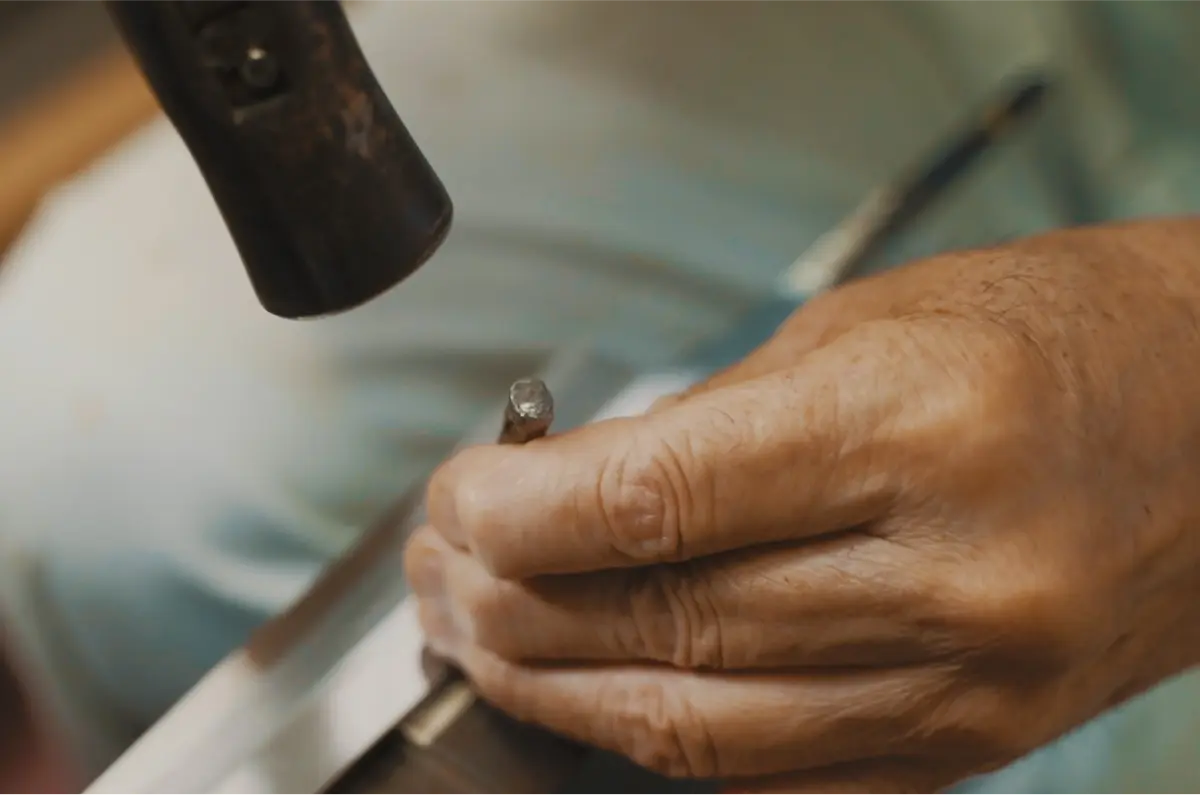


Carving name
This is the process of carving name of the craftsman or manufacturer on the surface of the blade.
Sakai cutlery knives are stamped with this seal as proof of their quality. Hand-engraved, each knife is unique.
![[2024] Knife variety](http://japanknifetoku.com/cdn/shop/articles/6_R3_2089-ARW3_873d87a1-2415-42b3-adcb-e9ad48dc40ec.jpg?v=1750312481&width=300)