
Sakai Toku Knives|Essentials for Sharpening a Knife for the First Time [2026 Edition]
Hello, I'm Okuhira, the owner of "Knife no Sakai Toku."
In Asakusa, we sell, re-sharpen, and teach knife sharpening, featuring knives crafted by artisans from Osaka, Sakai, and across Japan.
In this article, I will explain, in an easy-to-understand way, "what to prepare when sharpening a knife for the first time."
⸻
Conclusion: All you need is this, at a minimum
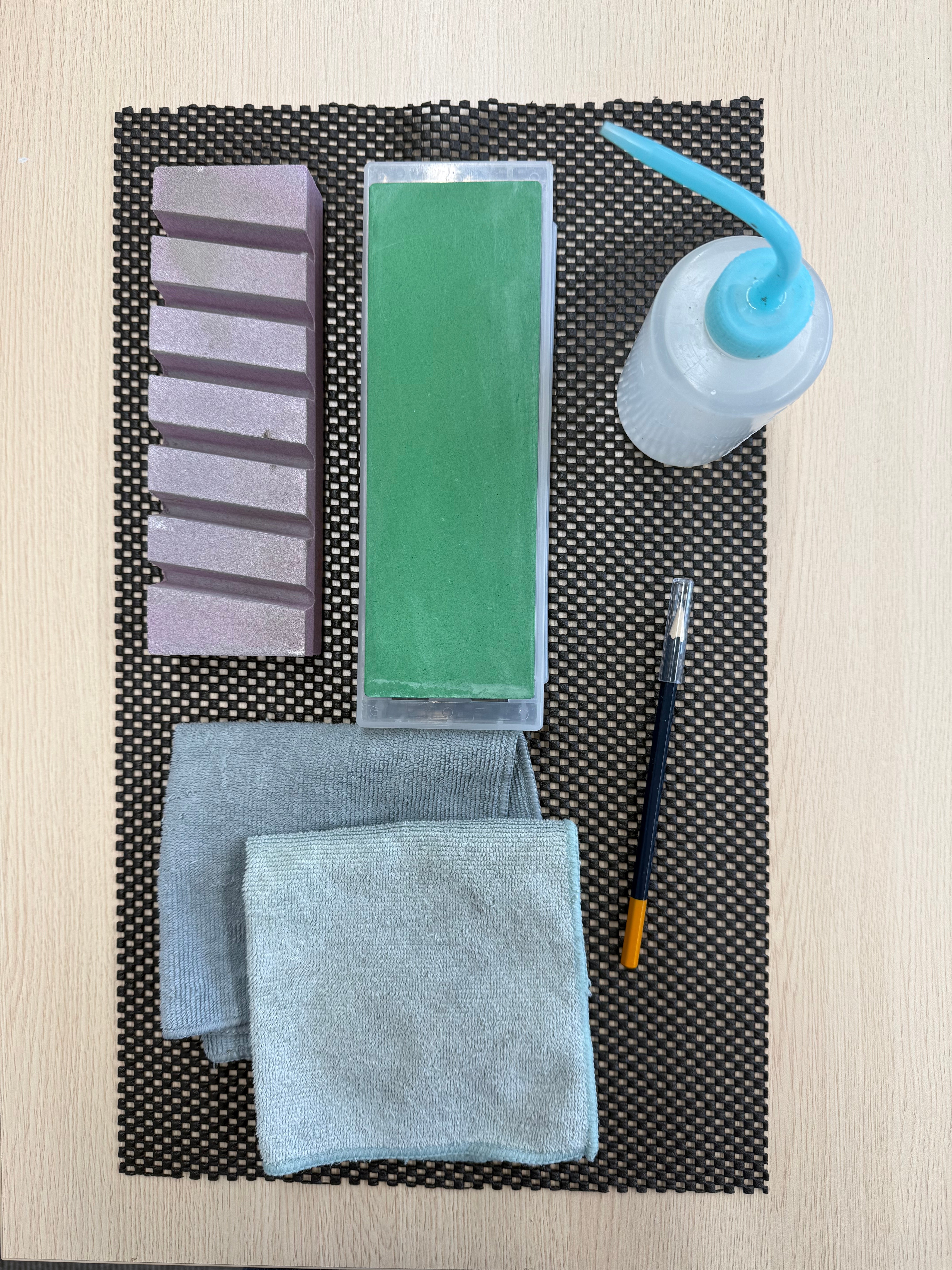
If you're sharpening a knife for the first time, the following items are sufficient to start with:
• Medium grit whetstone (#1000)
• Flattening stone
• Towel for wiping the knife
• Towel to place under the whetstone
• Water pitcher (for pouring water)
• Pencil (for checking flatness)
⸻
■Medium grit whetstone (#1000)
The first item you should prepare is a medium grit whetstone around #1000.
For Santoku knives, Gyuto knives, and petty knives used in general households, a #1000 whetstone alone can achieve a sufficiently practical sharpness.
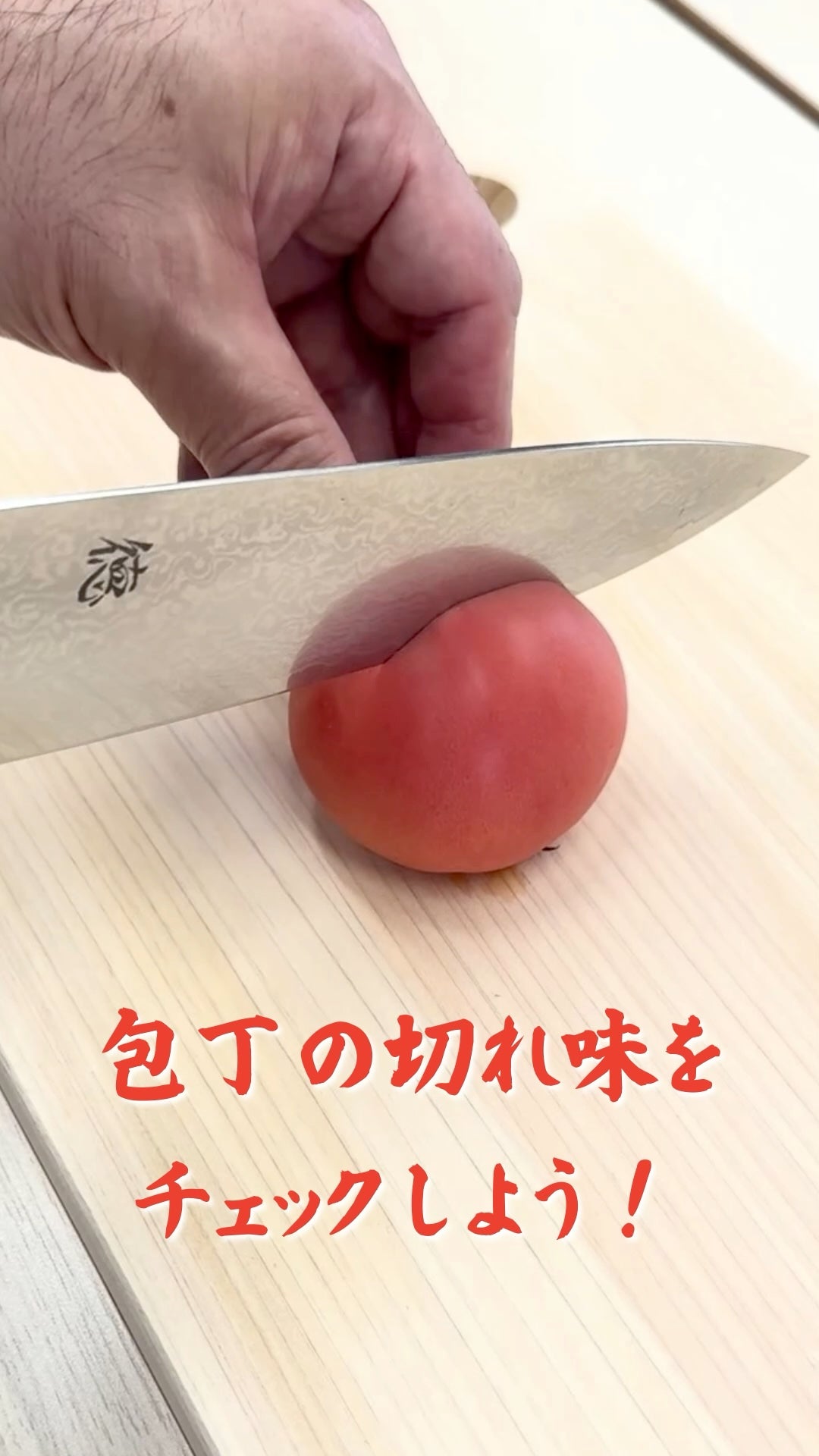
If you're aiming for a sharpness that can slice tomatoes thinly, starting with this grit is recommended.
For beginners, a "magnesia method" whetstone, which can be used without soaking in water, might also be easy to handle.
⸻
■Flattening Stone
Whetstones tend to become concave in the center with use.
A concave whetstone makes it difficult to sharpen a knife straight, and the sharpness will not be consistent.
Therefore, it's necessary to "flatten" the whetstone back to an even surface.
This is where a flattening stone comes in handy.
• Grooved type
• Diamond sharpening plate type
These are some of the types available.
⸻
■Towel for wiping the knife
When sharpening a knife, the sharpening slurry (mud) from the whetstone adheres to the knife.
Therefore, it's convenient to have a towel ready to wipe the knife.
However, sharpening slurry is difficult to completely remove even after washing, so
• An old towel
• A rag
is recommended.
A softer fabric would be easier to wipe the knife with.
⸻
■Towel to place under the whetstone
Many people probably sharpen their knives next to the kitchen sink.
Even if you use a whetstone case as a whetstone holder, placing a wet towel underneath it will prevent slipping and make sharpening more stable and easier.
It's also recommended for safety.
⸻
■Water pitcher (for pouring water)
When sharpening a knife, it's necessary to add an appropriate amount of water to the whetstone.
Whetstones are mainly made using the following methods:
• Vitrified method (requires soaking before use)
• Magnesia method (can be used without soaking in water)
• Resinoid method (can be used without soaking in water)
Regardless of the whetstone type, you'll need to add water during the sharpening process.
Having a water pitcher is convenient for adding just the right amount of water.
⸻
■Pencil
When flattening the whetstone, it's helpful to draw lines on its surface with a pencil.
By observing where the lines disappear as you grind, it becomes easier to check if the whetstone has become flat.
A pencil that can draw slightly darker lines, such as HB to B, is recommended.
■About Whetstone Grit
Whetstones are classified by their coarseness.
The following is a general guide:
|
Type |
Grit guideline |
|
Coarse Whetstone |
~#600 |
|
Medium Whetstone |
#800~#2000 |
|
Finishing Whetstone |
#3000~#5000 |
|
Super Finishing Whetstone |
#8000~ |
■What grit should I sharpen to?
For household Santoku, Gyuto, and Petty knives, #1000 is usually sufficient.
If you want an even smoother cut, finishing with a #3000 grit stone will make it easier to use.
For Deba knives
Since they are sometimes used for bones, #1000 to #3000 is recommended.
Sharpening to an excessively high grit can make the blade edge delicate and prone to chipping.
For Yanagiba knives
For knives that prioritize sharpness, like sashimi knives, finishing whetstones of #8000 or higher may be used.
However, for any knife, the important thing is that it has been thoroughly sharpened with lower grit stones.
If the foundation isn't properly laid, even using high-grit stones won't achieve sharpness.
First, aim to be able to sharpen properly with a #1000 grit stone.
⸻
■Whetstones available at Knife no Sakai Toku
Knife no Sakai Toku Asakusa store carries:
• Vitrified method
• Magnesia method
• Resinoid method
We offer a variety of whetstones.
Also, we have a sharpening booth in the store where you can actually try out the whetstones we sell.
"I don't know which whetstone is right for me."
"I want to try out the feel before buying."
Please feel free to consult with us.
Products available at Knife no Sakai Toku Link
⸻
About Knife no Sakai Toku (Asakusa)
Knife no Sakai Toku is a specialty knife store located in Asakusa.
• We offer a wide range of knives, from household use to professional grade.
• Thorough advice provided at the time of purchase.
• Sharpening, repair, and handle replacement services available.
• Sharpening workshops and experiences are also offered.
We value providing support to ensure your knives last for a long time, rather than just making a sale.
⸻
Store Information (Asakusa)
Knife no Sakai Toku Asakusa Store
Hours: 10:00 AM - 6:00 PM
Location: NW Building 6F, 1-11-4 Hanakawado, Taito-ku, Tokyo
• 1 minute walk from Asakusa Station North Exit on the Tobu Skytree Line
• 4-minute walk from Asakusa Station on the Tokyo Metro Ginza Line
※Please take the elevator to the 6th floor.
※"Just looking or consulting" is also welcome.
⸻
SNS・Contact
We share information on how to choose and sharpen knives.
• YouTube
• Instagram
Inquiries can also be made via LINE.

Leave a comment
This site is protected by hCaptcha and the hCaptcha Privacy Policy and Terms of Service apply.